

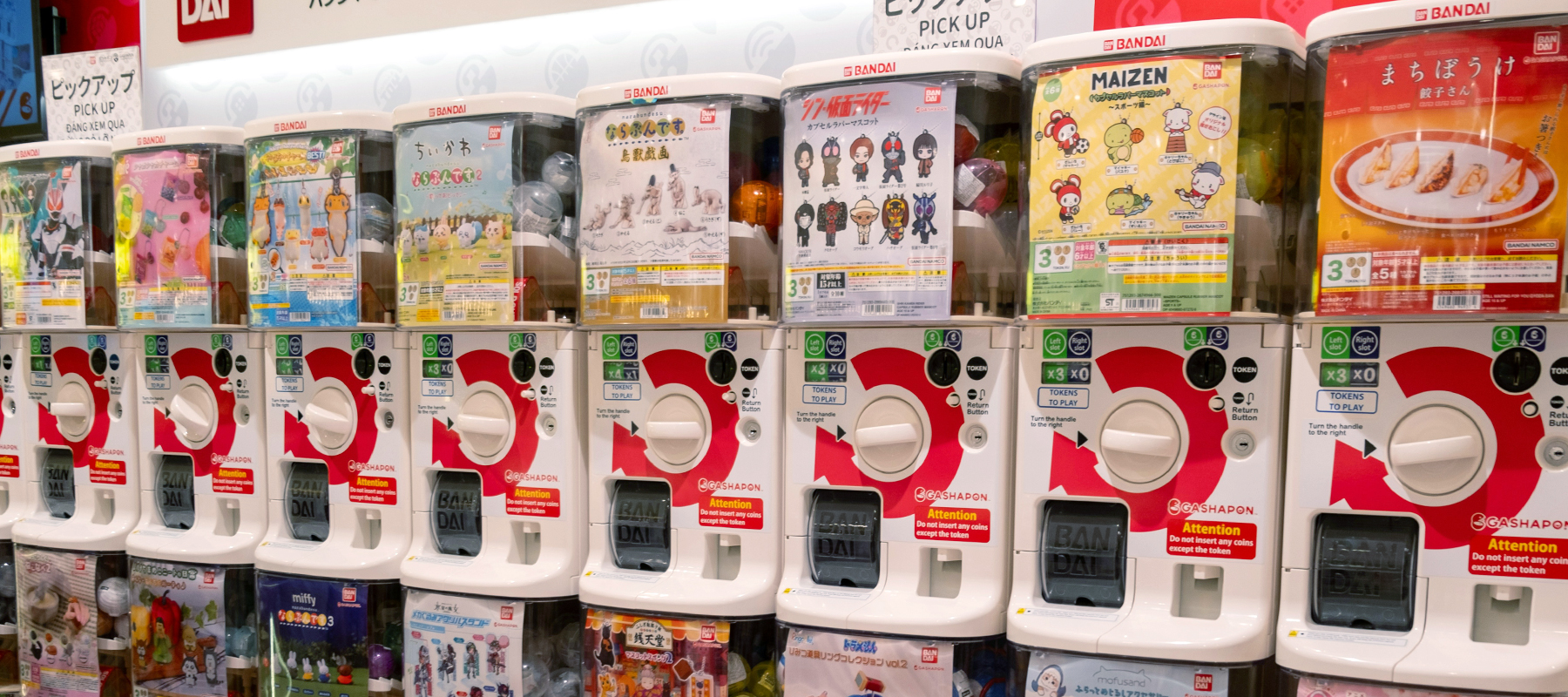
You Gashapons (Those automatic machines where you turn the crank and a surprise capsule with a collectible toy falls out) are all the rage in Japan. During my three-month stay between Tokyo and Osaka, along with my boyfriend, who collected over 100 gashapons, lol... here's my analysis as a brand strategist.
In large Japanese cities, it's impossible not to notice: there are thousands of machines scattered everywhere. And when you look closely, the variety and randomness of the available items. There are the classic and predictable, like Hello Kitty, One Peace, Snoopy, Disney, Star Wars, among others. But there are also the more unusual: cats dressed as ghosts, men with sushi heads, shooting birds, seated drink bottles, animals in the style of "The Scream," sleeping ketchup, Ultraman characters in the sauna… practically anything can be turned into a miniature gashapon.
Reflecting on this market, some findings emerge:
- Japan has one of the largest urban populations in the world, that is, there is a consumer for everything;
- A toy is no longer synonymous with an exclusively children's product. On the contrary: I noticed that most of the people in the machines were adults, a reflection of a trend not only in Japan but also worldwide;
- If there is a constant flow of people of all ages, it also becomes an opportunity for brands are present.
And that's exactly what many companies do. I've seen gashapons from brands like Listerine, Reebok, All Star, Cup Noodles, and even the Havaianas. Maybe it doesn't matter so much how many capsules are sold, after all, there are thousands of machines competing for attention in the same space. The point is different: be present in the consumer's daily life, reinforcing brand awareness in an alternative way.
Therefore, although the focus of gashapon is to entertain, it also helps in the brand awareness strategy for make a brand memorable.