

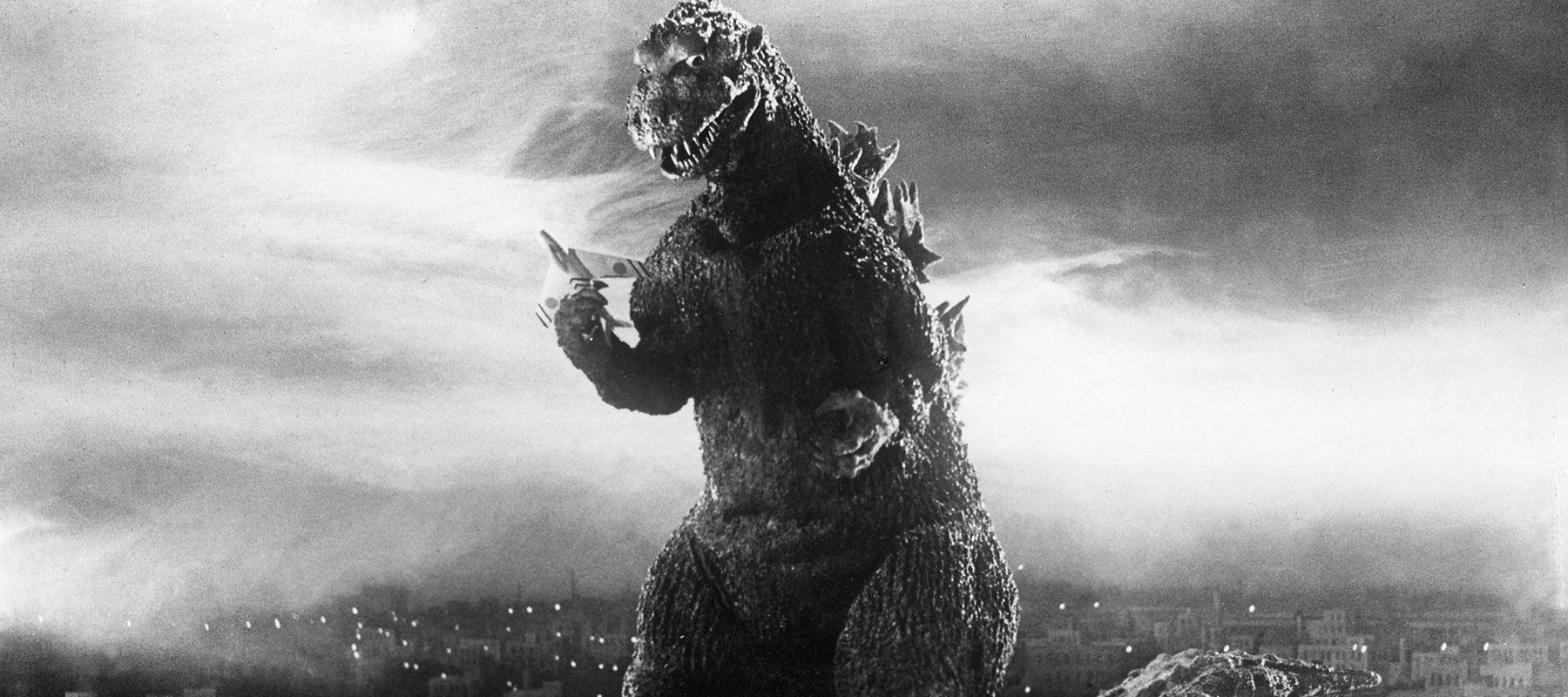
Many people see Godzilla as just a "monster," a giant lizard that destroys everything in its path and has become an icon of Japanese pop culture. But what few know is that his origins carry a deep historical and symbolic weight.
The director of the first film, Ishirō Honda, revealed that the idea arose from concerns about the hydrogen bomb tests carried out at the time, which caused major impacts on the environment.
In the original 1954 film, Godzilla emerges from the ocean as a creature awakened by nuclear testing. He's not just a villain; he's a force of nature deformed by human action. A kind of punishment, a consequence of what we are capable of causing.
Godzilla is the result of humanity messing with forces beyond its comprehension.
The launch of Godzilla a few years after the bombs on Hiroshima and Nagasaki, coupled with the frequent fear of natural phenomena such as earthquakes and typhoons, led many to interpret the monster as a metaphor for society's fear of major disasters in general.
During my three-month trip to Japan, I had the opportunity to visit the exhibition Godzilla 70, in celebration of the character's 70th anniversary. It was there that I learned more about this story. The exhibition featured works by various artists, each interpreting Godzilla from a different perspective.
According to the curator, Godzilla should not be seen as just a standard character, he is a living concept, which takes on different forms, meanings, and emotions depending on who observes it. It is precisely this multiplicity of interpretations that makes the character so present in Japanese culture to this day.
Therefore, Godzilla is not a simple villain, he is a mirror of human fear.