

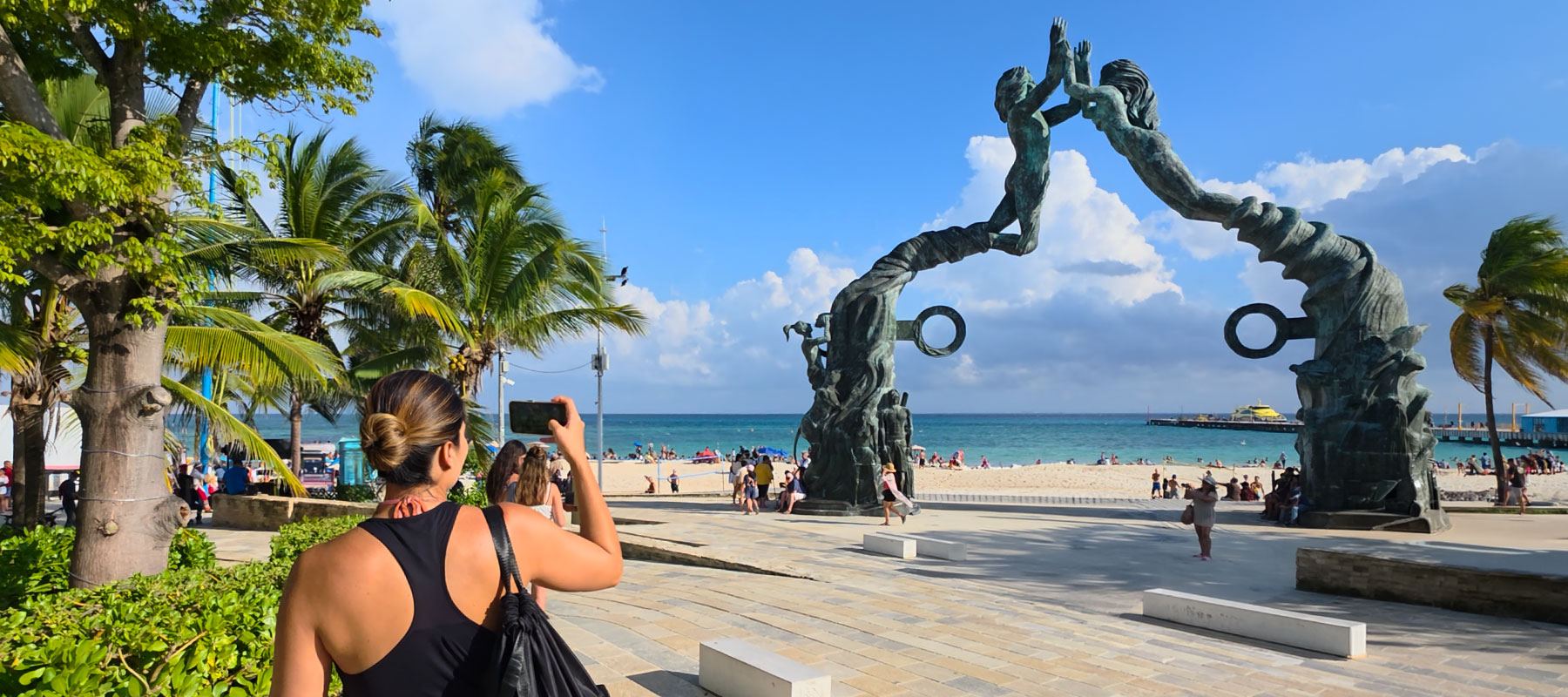
I spent 25 days in Playa del Carmen, in the Mexican Caribbean, at the end of last year as a digital nomad, meaning I worked while traveling. It was my second time there. For me, it's the perfect beach town, with the ideal combination of infrastructure, accessible paradise beaches, and plenty of things to do.
It wasn't a vacation.
In a typical Airbnb apartment, the routine began with a breakfast similar to those in Brazil, but with a Mexican twist: a different fruit, Oaxaca cheese, and a typical regional bread. Then, I'd assess the day's work and the weather. From there, it was an alternation between work, beach, work, gym, and a stroll downtown. Not necessarily all at the same time or in that order. And then there were the daily chores like cooking, laundry, grocery shopping… Ordinary life.
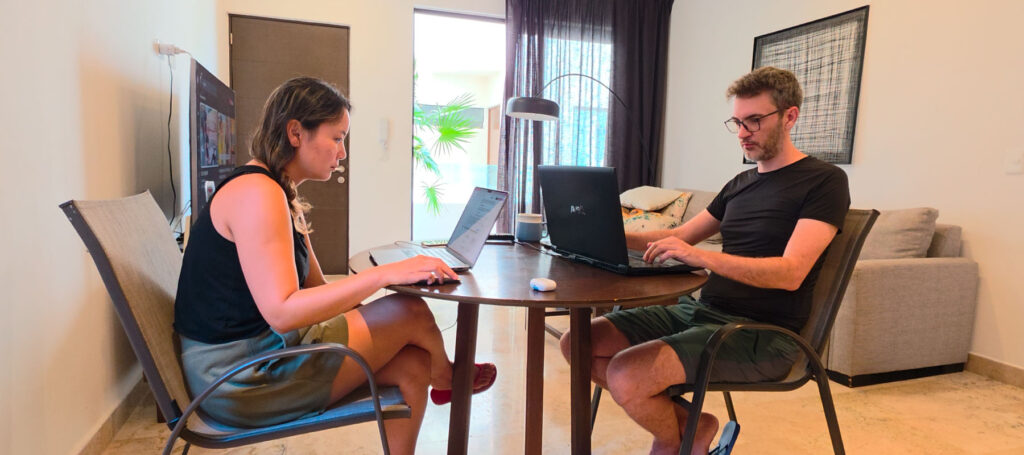
It wasn't a vacation.
On weekends, that was the time for sightseeing. Instead of going to the movies, I went snorkeling in Cozumel. Instead of strolling in the park, I visited the famous pyramid of Chichén Itzá. And if a gap arose between projects, I'd swap a Wednesday off for a Sunday of work. A routine doesn't need to be so rigid when its structure is simple and adaptable.
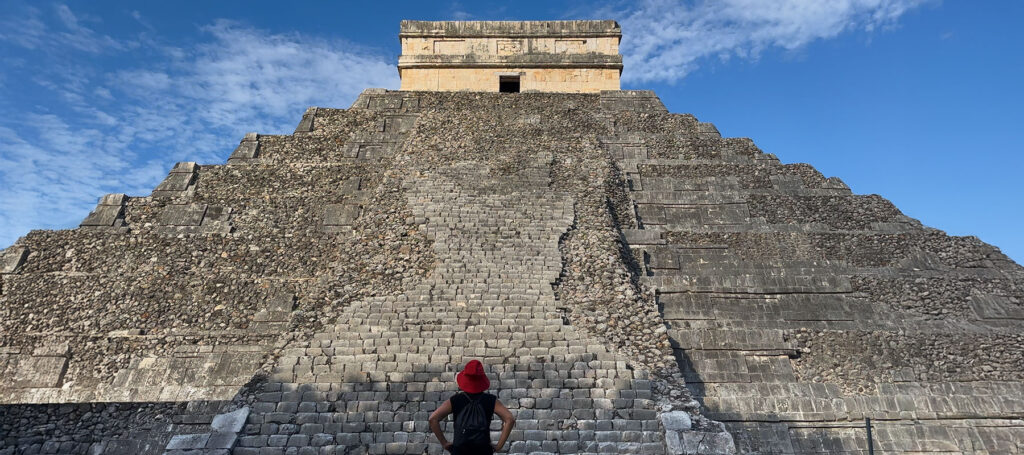
It wasn't a vacation.
The famous designer Stefan Sagmeister once said that every seven years he takes a sabbatical year to travel the world. The idea was to anticipate five years of retirement and distribute them throughout his professional life. That blew many people's minds. He says that this decision contributed to his creativity, added more value to his work and, of course, increased his personal satisfaction. He even presented a... TED about that.
Over time, I asked myself: why wait seven years? Why can't it be now?
But there's a catch: I'm not a wealthy heiress (as some people say), and my job as a designer doesn't allow me the luxury of taking a year off every seven years, like Sagmeister. So I thought about adapting it to my context: what if I work while traveling? Can't I still enjoy myself?
Therefore, it wasn't a vacation.
My relationship with vacations has changed a lot over time. When I was running an agency, I only allowed myself to travel between Christmas and New Year's, the period when demands decreased and my absence affected the company's operations as little as possible. I would desperately wait for my vacation. And when it finally arrived, I tried to live everything intensely, as if it were the last days of my life, haha.
Today, with more flexibility, that desperation no longer exists. What I'm experiencing is so interesting and stimulating that it even contributes to my work. I feel like I'm making the most of the present. Not that it's perfect, but it's good not to have to wait for the end of the year or retirement to enjoy life better, as we were taught. Especially since we don't know what tomorrow will bring.
Therefore, it wasn't a vacation.
I fully understand that everyone has their own challenges, and that for the vast majority, taking a year off like Sagmeister or living a life of constant travel, as in my case, would be unattainable goals. But have you ever questioned whether what we've always been taught is the only way to enjoy life? Are there other, more interesting paths that improve your personal and professional relationships? Perhaps what's missing is a short pause for reflection.
So, take a vacation.