

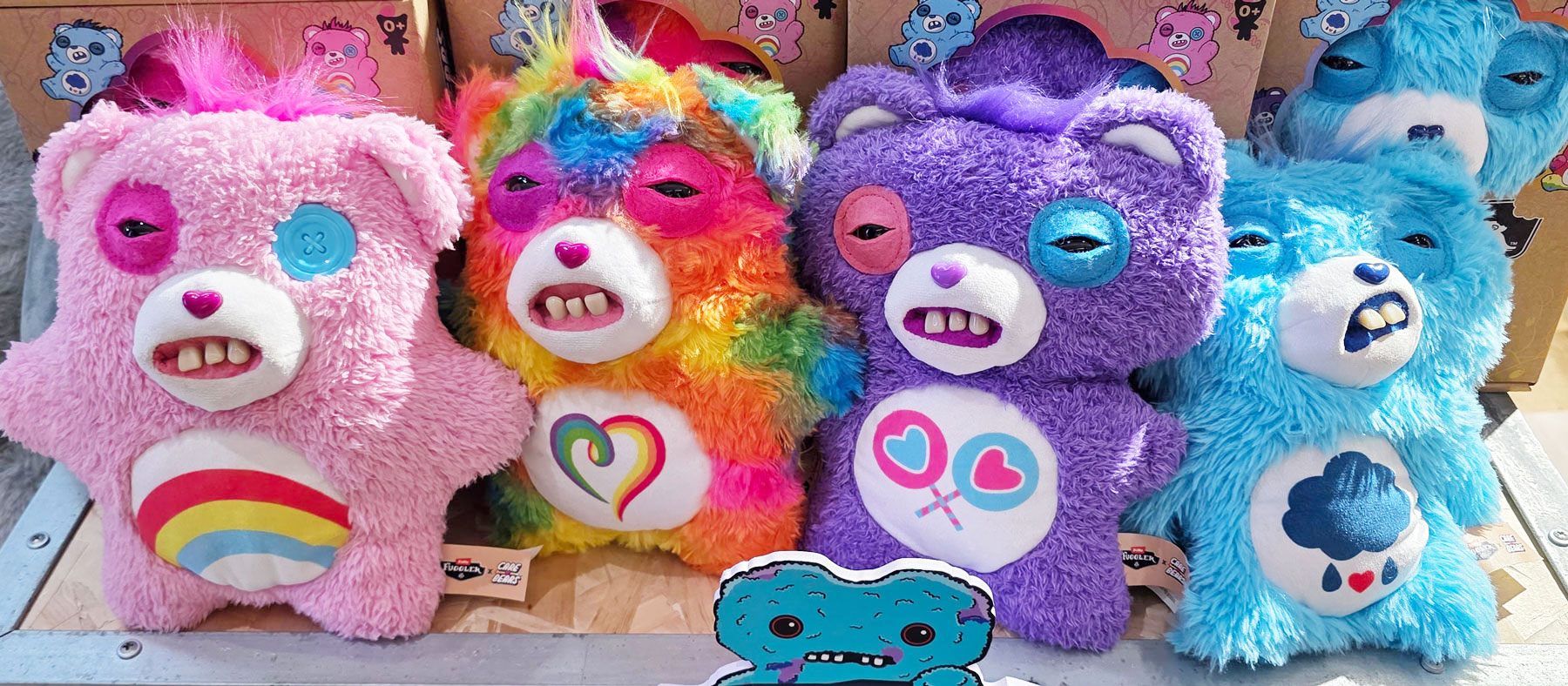
For some years now I have been following a curious trend in the world of toys: the rise of those that seem, at first glance, imperfect. They are not exactly ugly, but they are strange, disproportionate or even bizarre.
It's called ugly-cute — the “cute-ugly”.
Labubu is perhaps one of the most famous symbols of this trend. The little buck-toothed monster became a worldwide craze and transformed an unconventional aesthetic into an object of desire. Pop Mart itself, responsible for the phenomenon, has a series of characters that deviate from the traditional “cute and happy” standard, such as Crybaby, who is always crying; Skullpanda, with his somber appearance; Hirono, melancholic; among many others.
In a more extreme case, we have the Fugglers: with sleepy eyes and teeth that look like humans, they have a grotesque appearance, like someone who is “finished.” And it is precisely their originality and imperfection that have won them fans and made them gain traction on social media, especially in Asia.
Another very curious case is the success, in Japan, of plush toys of the more secondary SpongeBob SquarePants characters: the fish that appear in the background, living a rather monotonous life in Bikini Bottom. It is believed that this success is related to people's identification with the... mood These characters represent a daily life marked by weariness and discouragement.
It's not just in the world of toys.
Something bigger is happening. We've spent years seeing highly produced images: perfect bodies, perfect houses, perfect products… They are always perfect and desirable lives, yet unattainable. AI has only amplified this.
There is a lack of identification. That's why the imperfect now can seem more familiar, human, and real.
I'm citing toys as an example, but I also see this on social media. Big brands are investing less and less in highly produced advertisements and more in ordinary people, content creators, who talk about their products in their own language, even with limited production and outside of “branding” guidelines.
The public seeks identification.
Given this, brand marketing strategies must consider (even more so) that their conversation is always with a person on the other side, who has their own qualities, flaws, desires, dilemmas, difficulties, etc.
In other words, a good way to attract an audience isn't necessarily about showcasing the best image, but rather how it makes sense and connects with them. real world.